Does HAARP Study the Weather … or Control it?

High Frequency Active Auroral Research Program (HAARP) in Alaska

The HAARP military research program in central Alaska has been a darling of conspiracy theorists for over a decade. They claim it does everything from control the weather to controlling people’s minds. Former Venezuelan dictator Hugo Chavez even claimed the U.S. military used HAARP to cause the 2010 Haiti earthquake!

H.A.A.R.P. stands for High Frequency Active Auroral Research Program.

It was designed by the US military to study the Earth’s ionosphere. That is the upper-most portion of our atmosphere which stretches from about 53 miles (85 km) above the earth to around 370 miles (600 km). It’s a high-energy layer at the very edge of outer space, filled with charged particles. These particles respond to radio waves, so HAARP beams high-power radio frequencies straight up into the Alaska sky.

HAARP was built in 1993 at a cost of more than $290 million. It was earmarked by the late Senator Ted Stevens, a powerful Republican from Alaska. The program has been run over the years by the US Air Force Research Lab, Office of Naval Research, and the secretive Defense Advanced Research Projects Agency (DARPA).

HAARP’s public mission is to study the ionosphere’s physics, which is bombarded by our sun on a daily basis. Huge solar flares send charged particles racing toward Earth, disrupting communications and often our country’s electric grid. By studying the ionosphere, scientists feel they might be able to mitigate these problems in the future.

Science aside, the HAARP site certainly looks futuristic. It is peppered with 180 weird-looking, geometrically aligned, cross-shaped antennas, poking into the Alaska sky like alien hardware.  And like the infamous Area 51 in Nevada, it’s located in a remote military compound in the south Alaskan wilderness southeast of Fairbanks.

For those of you who might want to check it out, HAARP is located near Gakona, Alaska at GPS coordinates 62.39 N, 145.15 W off the Tok Cutoff Highway.  Its crown jewel is the massive high-power, high-frequency array known as the Ionospheric Research Instrument (IRI). The IRI went on line in 2007 and can actually agitate a chunk of our ionosphere for research purposes.

HAARP is so powerful, it can create an artificial aurora borealis in the Alaskan night sky.

The IRI consists of 180 dipole antennas in a 15 x 12 grid covering multiple acres. Together they can transmit 3600 kW of radio waves at frequencies up to 10 mHz. This energy is absorbed by the ionosphere and produces atmospheric fluctuations that can be detected back on earth by HAARPs instruments below.

The U.S. military was interested because our ionosphere plays a key role in transmitting radio signals. So it can be used to improve satellite communications. And, yes, the Department of Defense (DOD) has used it to study things they still will not fully disclose. For example, HAARP can turn the ionosphere into a giant antenna used to transmit signals strong enough to reach nuclear submarines underwater.

Not surprisingly, HAARP’s remote location and ability to manipulate the upper atmosphere has made it a favorite of various conspiracy theorists. The fringe nature of HAARP’s research doesn’t help.   When scientists do talk about the experiments, nobody but a trained physicist can fully understand the complexity.

Conspiracy theorists think HAARP’s purpose is far more sinister than what the military stated.

Former Minnesota Governor and ex-pro wrestler Jess Ventura believes the government uses the IRI site to both manipulate the weather and control minds. Others have blamed it for everything from superheating the atmosphere causing climate change, to the mysterious humming associated with alien encounters. They say HAARP was to blame for the downing of TWA Flight 800 in 1996 and Japan’s 2011 tsunami. The Russian military supposedly believed it has the power to jam global communications and even reverse the polarity of the earth’s poles!

HAARP, its military research, and its many conspiracies almost came to an end. In 2013, the site shut down, was abandoned and temporarily locked its gates.  The Air Force said Congress no longer wanted to pay the millions of dollars needed to staff and keep HAARP alive, and was prepared to dismantle it.

Aurora Borealis above the Alaskan HAARP

But fear not, HAARP lives on! Operation of the research facility was transferred from the US Air Force to the University of Alaska Fairbanks in 2015. It allows HAARP to continue its scientific exploration of ionospheric phenomenon via a cooperative Research & Development agreement with the Air Force.

In 2022, HAARP and the University actually held an Open House, free to the general public! The facility offered bus rides from Fairbanks, was open for walking tours, and had research results on display.  Just to show how far it’s come, souvenir HAARP T-shirts and even shot glasses were on sale, as well as hamburgers and hot dogs to help fund continued research.

But I am quite sure conspiracy theorists, somewhere in their darkened basements, think this is nothing but a cover-up, a clever ruse; and flood social media with their theories.  They believe the U.S. military continues HAARP’s more nefarious purposes to this day. Somewhere behind thick steel doors, deep underground in the frozen and remote Alaskan wilderness. In 2016, two Georgia men arrested on drug charges were supposedly plotting an act of domestic terrorism based on HAARP conspiracy theories.

For more by historical writer Paul Andrews, click BOOKS.

主页 » 博客 » Page 23

Podcast: The Deadly Galveston Hurricane of 1900


On Saturday, September 9th, 1900, a Category 4 Hurricane slammed into an unsuspecting, unprepared Galveston. At the time, it was a bustling port city on a Texas barrier island in the Gulf of Mexico.  In the days before weather satellites or even radio, the people of Galveston had absolutely no warning, and no time to evacuate.  The devastation to come from the Galveston Hurricane was nothing short of Biblical.

Beachfront Memorial to the victims of the 1900 Galveston Hurricane
Click Here to read the blog.

主页 » 博客 » Page 23

Podcast: Remember the Sultana! The Civil War Disaster


More souls died during the Riverboat Sultana disaster than on the RMS Titanic!  The Sultana disaster on the Mississippi River during the U.S. Civil War is in fact, the worst maritime disaster in U.S. history.  So why is it such a forgotten piece of Americana, with no historical site or Hollywood film?  Everyone remembers the Alamo or Pearl Harbor, so why not the poor Sultana? 

The Sultana Disaster on the Mississippi River, 1865
Read SULTANA AWAITS, a Historical Novel of the Sultana Disaster by Paul Andrews:  CLICK HERE
主页 » 博客 » Page 23

Podcast: The Lingering Legacy of the Chernobyl Disaster


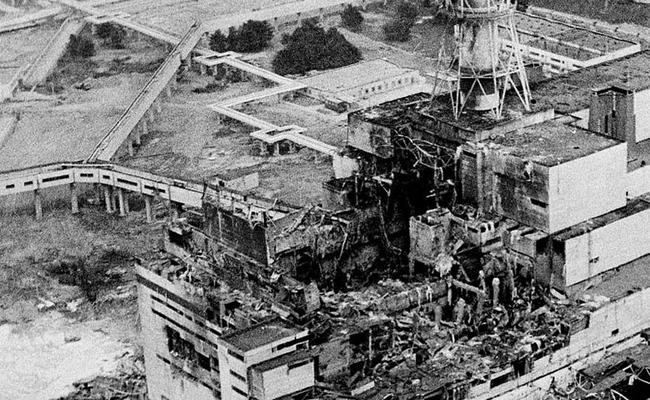
The greatest nuclear disaster the Earth has ever known, worse than even Japan’s  Fukushima, or the U.S. Three Mile Island, began innocently enough in the early morning hours of Saturday, April 26th, 1986 at the Soviet Union’s Chernobyl Nuclear Power Plant in Ukraine.  A simple safety test was about to be performed that would terribly, terribly wrong. The resulting explosion would contaminate both the site and surrounding countryside for centuries to come.

Chernobyl Nuclear Reactor #4 following the explosion
Chernobyl Nuclear Reactor #4 following the 1986 explosion
Prefer to Read a Blog version?  点击此处

主页 » 博客 » Page 23

Birmingham Bombing Killed Four Black Girls

The Four Little Girls, victims of the Birmingham Church Bombing
The Four Little Girls, victims of the Birmingham Church Bombing in 1963.

The Birmingham Bombing in Alabama was a sad day in U.S. history. Just 60+ years ago, on a sunny Sunday morning, September 15, 1963, services began at the 16th Street Baptist Church in Birmingham, Alabama. The mainly Black congregation greeted each other with broad smiles like they did any other Sunday. It was also Youth Day and in the basement, 5 young girls, two of them sisters, gathered in the Ladies Room. They wore their best Sunday dresses and excitedly checked themselves in the mirrors. They chatted about the new school year and the roles they would play in the service on Youth Day.

Just before 11:00 o’clock AM, families in the pews settled in and began fanning themselves from the oppressive Southern humidity. The pastor smiled and waved to the congregation as he walked to the podium to begin. But instead of rising to praise God in song, the gathered congregation was shockingly knocked off their feet! A bomb violently exploded under the side steps of the church. The tall windows shattered and red bricks flew through the air like grenades.

“Hit the floor!” someone shouted, and they all scrambled under the pews for shelter.  

In the minutes after the explosion, screams, panic and worry filled the smoky air. ‘Is the church on fire?  Was that a bomb? Oh Lord, where’s my family?‘  Few believed it was an accident.  They knew it had to be another bomb.  You see, so many acts of terror had already occurred their city it was known as “Bombingham.”  This was the 3rd bombing in just 11 days, after a federal court order had mandated the integration of Alabama schools. The March on Washington had occurred 2 weeks earlier, with Dr. Martin Luther King Jr. giving his famous “I Have a Dream” speech.

They were right.  During the dark of night, the bombers had hidden a stack of dynamite under cinder block steps on the east side of the church, next to the basement, near the girls’ rest room.  Most of the dazed and injured parishioners were able to stumble out of the smoke-filled church and into the rubble of the street outside. Where are the girls? Someone shouted. Has anyone seen my girls? A frantic search was begun. The bodies of four young girls were eventually found dead beneath the rubble in the basement.

Addie Mae Collins (14), Denise McNair (14), Carole Robertson (14), and Cynthia Wesley (11).

Addie’s sister, Sarah Collins (12), was rescued by a Deacon and managed to survive, but was permanently blinded in one eye from glass shards. More than 20 others were seriously injured and required hospitalization. The bodies of the four girls were solemnly carried out on covered stretchers.

But why Birmingham?  After the Civil War, the city rapidly became the state’s most important industrial center AND America’s most racially segregated. The current Alabama Governor George Wallace was a heated opponent of desegregation, and Birmingham possessed one of the most violent chapters of the KKK. The city’s police was also notorious for using brutality in combating demonstrators, most especially Black ones.

Birmingham, Alabama church bombing remains, 1963

It was no accident that white supremacists in the Ku Klux Klan (KKK) chose the 16th Street Baptist Church. It was the largest Black church in Birmingham. It was used for all kinds of local and national civil rights meetings, drawing leaders like Rev. Martin Luther King Jr..  The large brick church, with its 2 red-domed towers had a basement auditorium that held mass meetings of the civil rights movement. Many of Birmingham’s protest marches began at the broad steps of the church. The KKK routinely called in bomb threats to disrupt civil rights meetings and church services.

It was precisely because of this reputation, that civil rights activists made Birmingham a focal point of their efforts to desegregate the South in the 1960’s. By the time of the Birmingham Bombing, thousands of activists had already been injured during street protests by police fire hoses and attack dogs with many imprisoned.

The protests were working!  Due to the Birmingham Campaign, that spring the city finally agreed to desegregate lunch counters, restrooms, and drinking fountains, AND to release jailed demonstrators. This infuriated white supremacists who continued a plague of violence against Blacks. On September 9th, President John F. Kennedy took control of the Alabama National Guard to enforce court-ordered desegregation of public schools, which Governor Wallace was vehemently blocking.

After the Birmingham Bombing, Rev. Martin Luther King Jr. sent a telegram to Governor Wallace saying bluntly:

The brutal deaths of 4 little girls in a church on a Sunday morning shocked the U.S. and drew international attention to Birmingham. Many whites were outraged and offered services and condolences to the families. Over 8,000 people attended the solemn funeral service of 3 of the girls. Rev. King himself spoke passionately, fanning the public outrage growing across the country.

In the days following the blast, thousands of angry Black protesters gathered at the church. When Governor Wallace sent police and state troopers to break up the gathering, violence broke out across the city. Protesters were again arrested and 2 young Black men killed before the National Guard was called in to restore order.  Outrage over the Birmingham Bombing and the violent clash helped draw national attention to civil rights movement.

Though certain Birmingham white supremacists were immediately suspects in the bombing, repeated calls for the men to be brought to justice went unanswered.  How could this happen in America? the people wondered.

‘How could 4 young, black girls be ruthlessly murdered at a church on Sunday, and Birmingham go back to business as usual?’

The FBI office in Birmingham launched an investigation that dragged on for years. In a 1965 memo, agents named four men as their primary suspects – Thomas Blanton, Robert Chambliss, Bobby Cherry, and Herman Cash. All four men were members of Birmingham’s Ku Klux Klan infamous Chapter #13. It was considered one of the most violent in the South and responsible for the 1961 Freedom Riders Attack at the Birmingham bus station.

The investigation ended however, in 1968 after five long years with NO indictments. According to the FBI, although they had identified the four suspects, witnesses were reluctant to talk and physical evidence was lacking.  FBI Director J. Edgar Hoover chose NOT to approve the arrests, stating, “The chance of prosecution in state or federal court is remote.“

It was more than a decade before state authorities took action. In 1971, Attorney General Bill Baxley reopened the case.  He obtained the FBI evidence and convinced reluctant witnesses to testify.  The Attorney General charged Klan leader Robert “Dynamite Bob” Chambliss with murder. He was finally convicted in 1977.  Chambliss died in jail in 1985, never admitting to the Birmingham Bombing.

Thirty-eight years after the Birmingham Bombing, Thomas Blanton Jr. was likewise convicted of murder and sentenced to life in prison in 2001. A year later, Bobby Frank Cherry, who had bragged about setting the explosives himself, was also found guilty and given life in prison. His ex-wife and son testified against him.  He died in 2004 at age 74.  The 4th suspect, Herman Cash, died in 1994 before he could be brought to justice.  Tom Blanton is currently over 80, incarcerated at the St. Clair Prison in Springfield, Alabama.  

Even though the U.S. legal system was slow providing justice to Birmingham’s Black community, the after-effect of the bombing was immediate and significant.  National outrage helped build support in U.S. Congress to finally end segregation.  It lead to the passage of both the Civil Rights Act of 1964 and the Voting Rights Act of 1965, signed into law by President Lyndon Johnson.  So in that sense, the bombing’s impact was exactly the opposite of the fear that the white supremacists had intended.  Plus it planted one of the seeds for the Black Lives Matter movements decades later in 2013.

The fifth little girl, Sarah Collins, survived the Birmingham bombing
The fifth little girl, Sarah Collins, survived the Birmingham bombing.

The fifth little girl, Sarah Collins Rudolph, who lost one eye in the bombing, is now in her seventies. She still lives in Alabama with her husband, George, surrounded by pictures of her older sister. Sarah never received any help, financial or medical, from the city or state. She blames Governor Wallace for inciting the Klan violence with his incendiary words. Sarah wrote a book about her experiences since then, The Fifth Little Girl. Today, she occasionally travels the country, talking to school children and churches, and giving TV interviews about the fateful Birmingham Bombing. 

For more by historical writer Paul Andrews, click on BOOKS
主页 » 博客 » Page 23

Poland’s SOLIDARITY Movement was the 1st Crack in Communism

Solidarity Protestors in Warsaw, 1980

Poland’s Solidarity [Solidarnosc] labor union was nothing less than Revolutionary, the 1st crack in the Soviet Union’s Iron Curtain, leading to its ultimate demise.  Since the mid-1970s, Poland’s Communist economy was spiraling downward — production had plummeted, wages stagnated, and shortages were everywhere. In 1979, the new Polish Pope John Paul II famously visited Warsaw, delivering a veiled message to the people during Mass:

“Be not afraid!” (to rise up)

Pope John Paul II, 1979

In the summer of 1980, the Communist Party announced yet another increase in food prices.  So on August 14th at the Lenin Shipyards in Gdansk, around 17,000 workers occupied the shipyard and went on strike. Their labor leader, Lech Walesa, had narrowly avoided arrest by the secret police.  He managed to scale the shipyard fence and join his co-workers. Walesa was a man of the people, a burly, mustached, natural leader involved in the labor movement for a decade.

Soon, workers in 20 other area factories joined the strike in solidarity.  On August 17th, the Gdansk Strike Committee, drew up a list of 21 Postulates (demands), which they posted on the shipyard gates. They included the right to strike, reduced censorship, and freedom for political prisoners. At the top, they demanded FREE TRADE UNIONS, independent from the Communist Party. There was tremendous excitement and electricity in the air.

Polish leaders turned to Soviet Premier Leonid Brezhnev for council. Brezhnev wanted a solution rather than force. Having recently invaded Afghanistan, he did not want to supply Soviet military. So, Polish leaders reluctantly opened negotiations with Walesa and the strikers.

This resulted 14 days later in the GDANSK AGREEMENT of August 31st. A triumphant Walesa appeared before the workers in the shipyard with an historic message:

“We have an independent, self-governing trade union! We have the right to strike!”

Labor Leader Lech Walesa

On September 17th, the Independent Self-Governing Trade Union Solidarnosc (Solidarity) was formed, the first since WWII. However, Solidarity’s remit was clearly defined by the Communist Party such that “these new unions may defend the social and material interest of the workers, BUT NOT play the role of a political party.”

Solidarity was the beginning of a social revolution across Eastern Europe. The people emerged transformed. Solidarity created a sense of hope and confidence in conflict. The union grew rapidly, peaking at almost 10 million members in 9 months, about 70% of all workers and a third of the total population!

The failure of the Communists meant that Solidarity was a threat. As months passed, it became clear that improvement would not be possible without political restructuring. Feeling emboldened, Solidarity adopted a politicized stance and began agitating for a nationwide strike and more.

On October 16th, 1981, Solidarity published an Official Programme, with a new combination of economic AND political aims, containing increasingly Revolutionary rhetoric. The programme attacked the failures of the Communist Party, referring to Solidarity as “The moral rebirth of the people” stating that:

“There is no bread without freedom. We have united for the right to determine the aspirations of our nation!”

Solidarity programme

The Communist Party began to lose its hold over public opinion. The Communists responded with a blisteringly negative propaganda campaign, discrediting Lech Walesa and Solidarity’s leader as anarchists and opportunists out to fill their own pockets.

The growing popularity of Solidarity also elicited concern from Moscow. In Russia, the Soviet masters were growing increasingly concerned. In 1981, the Warsaw Pact (NATO’s Cold War counterpart) issued a statement stating fraternal solidarity with Poland’s communist leaders in overcoming the country’s “difficulties.”

On October 18th, General Wojcech Jaruzelski a stern hardliner was appointed as Poland’s new leader. He was given a clear mandate by the Kremlin to suppress Solidarity. On December 13th, Jaruzelski declared Martial Law and army tanks rolled onto the streets of Polish cities. He addressed the people on television:

“Our country stands on the edge of an abyss. A national catastrophe is no longer days away, but hours. We have to say: That is enough!”

General Wojcech Jaruzelski

Solidarity was outlawed, its leaders arrested and its supporters repressed. Over 1700 Solidarity leaders were imprisoned, including Lech Walesa. 800,000 lost their jobs. Walesa spent a year in a Communist prison.  When released, he was under constant watch by the Communist secret police for the next 7 years.  Martial Law would remain in force in Poland for another 2 years until July 1983.

Although Solidarity was outlawed, the movement survived underground. Networks illegally distributed anti-communist newspapers, leaflets, and posters. In April 1982, Radio Solidarity began illegal broadcasts. Solidarity promoted civil resistance, continued their fight for workers’ rights and pushed for political change. And it never wavered from one of its key principles — a Gandhi-like nonviolence.

Solidarity’s efforts were aided by financial help from American trade unions, as well as constant moral support from Pope John Paul II. The pope returned to Poland in 1983 meeting with both General Jaruzelski AND Lech Walesa, making international headlines. The deeply religious Walesa fell to his knees in prayer at the first sight of the pope, and had to be coaxed to stand.

This strategic alliance with the Catholic Church, lent a powerful legitimacy. Solidarity enjoyed considerable support internationally. Lech Walesa was even awarded the 1983 Nobel Peace Prize. He sent his wife and children to collect the award in Norway, fearing General Jaruzelski wouldn’t allow him back in the country.

In 1985, Mikhail Gorbachev became the new Soviet Premier and began a more reformist agenda in Eastern Europe. Moral support came from President Ronald Reagan in the US and Margaret Thatcher in Britain, which refused to grant debt-ridden Communist Poland economic aid until it legalized Solidarity.

By 1988, the Communist Party was finally ready to negotiate.

They had little choice: rationing had been in place for most of the decade. Solidarity was simply too big and too broad to either repress or ignore. In early 1989, the 2 sides signed a 400-page agreement on sweeping political and economic reforms that officially recognized Solidarity again.

Lech Walesa, Polish President, 1989
Lech Walesa, Solidarity Leader and Polish President, 1989

Its membership quickly increased to 1.5 million. In June 1989, the first free elections took place in Polska since 1945. Solidarity was the main opposition to the Communists, sweeping to victory, winning all contested seats in the Polish Parliament.  In August, a Solidarity-led coalition government was formed. None other than Lech Wałęsa was elected President. Of course, Solidarity now faced a new challenge: dismantling Communism and overseeing Poland’s transformation into a modern, democratic state.

Three months later, the West and East German people also rose up, and the infamous Berlin Wall finally came crumbling down. Communist Hungary and Czechoslovakia had similar, softer revolutions. In December 1991, Soviet Premier Mikhail Gorbachev suddenly announced the unthinkable – the complete dissolution of the Communist Soviet Union.  Its member states would all become independent republics, the largest being the Russian Federation.

In the wake of all that, Poland even became a member of NATO in 1999. The world owes the end of Soviet Communism and the Iron Curtain to Solidarnosc and the amazing courage of the Polish people.

如需阅读历史作家保罗·安德鲁斯的更多作品,请点击书籍。
主页 » 博客 » Page 23

Who Burned the Great Library of Alexandria?

Depiction of the Burning of the Great Library of Alexandria

The Great Library of Alexandria, on the coast of northern  Egypt was once the largest of the ancient world, containing the works of Homer, Plato, Euclid, Socrates, Aristotle and hundreds more. Close to one million books and scrolls from across Greece, Assyria, Egypt, Persia and India filled its vast shelves.  It’s believed to have been completely destroyed in a devastating fire about 2000 years ago and its thousands of priceless works burnt to ashes.  Its loss has haunted historians and scholars for centuries.  But exactly How, When and Who is responsible remains a perplexing mystery.  One that’s deepened by the fact that NO archaeological remains of the great library have ever been found in modern times!

The Mediterranean seaport of Alexandria was founded by ALEXANDER THE GREAT around 332 BC after the Greek conquest of Egypt.  Upon seeing the ancient library of Ashurbanipal in Ninevah, Alexander desired to have his own, even grander Library to promote Hellenistic culture.  He chose Alexandria as the site and assigned that responsibility to his Macedonian general Ptolemy.

Alexander III died in Babylon at only 32 in 323 BC, likely having been poisoned.  He left no heir, and the Greek Empire was divided amongst his 3 top generals.  Ptolemy I took North Africa and Egypt, proclaiming himself pharaoh, and making Alexandria his capital. Formerly just a small fishing village on the Nile delta, Alexandria became the seat of Egyptian rule, replacing Memphis.

The Greek scholar Demetrius, convinced Ptolemy to establish a Library. One that would house a copy of every book in the world, rivaling even Athens. Together they built the Musaeum, “Temple of the Muses” (where the word museum comes from) and the adjoining Library in 283 BC.  It was a place of study, modeled on the Lyceum of Aristotle in Athens, which included the library, lecture areas, laboratories, shrines, gardens, even a zoo!

The Musaeum and Library were located on the grounds of the Royal Palace and a priest was chosen by Ptolemy I to become the first Librarian.

His successor and son, pharaoh Ptolemy II, formally established the ‘Royal Library‘ envisioned up by Alexander and his father.  More than 100 Greek scholars lived in the Musaeum to research, lecture, and publish. And to translate and collect original manuscripts from the known world of Greece, Assyria, Persia, and India, including Buddhist and Hebrew texts.

At its peak, over 700,000 books and papyrus scrolls filled its teaming shelves.  During the reign of Ptolemy II, the Royal Library became so huge that a second library was established at the Temple of Serapis. The famous Lighthouse of Alexandria was also built at this time.  His successor and son, Ptolemy III, hungered for even more knowledge.  He ordered all ships docking at the port of Alexandria to surrender their manuscripts to the growing library!

Over the next few centuries, the Library of Alexandria became the largest and most significant in the ancient world. The great scholars of the age, scientists, mathematicians, poets, philosophers from both western and eastern civilizations came to roam its many halls and freely exchange ideas.  The world has not seen the same since.

It’s not known when the Library was destroyed as there are unfortunately no eyewitness accounts to its demise.  Archaeologists aren’t even sure in which century it occurred AND don’t know exactly where the library sat in the city.  The infamous destruction of the Library of Alexandria has been debated for centuries.  So what are the best theories?  Whodunit?

Suspect #1: Julius Caesar

Yes, the prime suspect is none other than the great Julius Caesar. Some believe that during the Roman occupation of Alexandria in 48 BC, Caesar found himself in the Royal Palace, cut off by the Egyptian fleet in the harbor.  Greatly outnumbered, he ordered his men to set fire to the blockade of Egyptian ships.  But the fire got out of control and spread to the city.  Roman philosopher Seneca, says that at least 40,000 scrolls were destroyed in a single library warehouse near the harbor.

So does this mean the great Library of Alexandria burnt down as well? The Musaeum, which was right next door was apparently unharmed, as it was mentioned by the geographer Strabo 30 years later.  Strabo doesn’t mention the Library though, so maybe Caesar WAS responsible for burning it down.  Caesar wrote of starting the fire in the harbor, but never mentions the burning of the Library.  So while its colorful to say the famous Julius Caesar did it, the facts don’t fully support this theory.

Suspect #2: The Christians did it

In 391 AD, the Christian Emperor Theodosius issued a decree outlawing all pagan practices in the Roman Empire including the Olympics. He ordered the Temple of Serapis in Alexandria destroyed and a Christian Church built on the site. As this contained the library annex, manuscripts are assumed to have been destroyed as well (it contained about 10% of the Library of Alexandria).  No other sources mention the destruction of the Library itself.  So, there’s no actual evidence that 4th century Christians destroyed it.

After Theodosius’ death, riots broke out when Orestes, the city Prefect, ordered a Christian monk named Hierax, publicly killed. After this, there was mass havoc as Roman Christians retaliated against both Pagans and Jews.  Orestes was rumored to be under the spell of Hypatia, a female philosopher and daughter of Theon, the last Librarian. Hypatia was then brutally murdered by a Christian mob and dragged naked through the streets in 415 AD.  So it’s been theorized that the Royal Library was also burned to the ground at the same time as all this chaos.

Suspect #3: The Muslims did it

The last suspect is the Muslim Caliph Umar. In 640 CE, the Arabs captured Alexandria after a long and bloody siege. According to this theory, the conquering Muslims heard about the magnificent books and scrolls in the library containing all the knowledge of the world. But the Caliph was unimpressed by this collection of higher learning.  He stated ‘They will either contradict the Quran, in which case they are heresy, or they will agree with it, so they are superfluous.  Destroy them all.’

The precious manuscripts were said to be used as fuel to heat the water for the 4,000 bathhouses in the city. It’s been said to have taken 6 months to burn them all. However, this particular theory was written 300 years later by Christian Bishop Gregory. He may have simply wanted to tarnish the image of the heathen Muslim invaders.  While the Arabs may have destroyed the library at Alexandria, by the mid 7th century we know the ‘Royal Library’ no longer existed.  There is no mention of any library in Alexandria any longer.  


So which was it – Romans, Christians or Muslims?  I am afraid trying to choose one single culprit is futile. Alexandria was a volatile and violent metropolis back then, especially during the lengthy Roman occupation. During this time, many parts of Alexandria were routinely devastated by wars.  This means that the ‘catastrophe’ could have occurred gradually over a period of four hundred years.  The Royal Library may not have gone up in flames at all, but rather could have been gradually sacked, destroyed and abandoned over time.

Modern Alexandra and the Bibliotheca Alexandrina

Today, Alexandria is a modern metropolis, the third largest city in Egypt. A new Bibliotheca Alexandrina was completed in 2002 and can house some 8 million books on its 11 floors. In 2004, Egyptologists claimed to have found its location after unearthing what appear to be 13 lecture halls.  Maybe one day, buried deep beneath the ruins of ancient or modern Alexandria, intrepid archaeologists will discover the chambers, rooms, and maybe even the precious scrolls, of the great Library.  Some believe that the great Library of Alexandria could still be more or less intact, somewhere deep beneath a modern Egyptian city.

如需阅读历史作家保罗·安德鲁斯的更多作品,请点击书籍。
主页 » 博客 » Page 23

The Mysterious Madame Blavatsky – Psychic or Charlatan?

Listen to audio Podcast: CLICK HERE
Helena Petrovna Blavatsky

Madame Blavatsky (HPB to her followers) was a controversial 19th century medium, psychic, author and co-founder of the Theosophical Society.  She claimed to be in contact with the ‘The Masters’, astral beings of great psychic powers who bestowed upon her the ancient secret science of Theosophy.  The society grew from a modest start in 1875 to become a multi-national organization with thousands of members and branches that still exist today.

So who was this mysterious woman, chased by controversy and scandal her entire life?  Blavatsky  was born Helena von Hahn in Ukraine 1831 and raised primarily by her grandparents.  At 17, her family married her off to Governor Blavatsky, an imperious man over 20 years her senior. After 3 months, she took one of his horses and left him;  keeping his name, however, for the rest of her life.

She fled first to Istanbul and later England. At age 20 in London, she claims to have met her first ‘Master,’ a tall, handsome Indian prince named Morya. She says he recruited her on a ‘Great Mission’ to help all of humanity. She began to study Eastern mysticism and slowly gained a reputation in England as a spirit medium, claiming both telepathy and telekinesis.

 In 1868, Blavatsky traveled to India and Tibet, where she claimed her Master Morya took her to the mythical city of Shamballah in the Himalayas.

There she met many other ‘Masters,’ astral beings with great psychic powers, including the immortal alchemist the Count of Saint-Germain.  Blavatsky said it was in the Himalayas that the Masters bestowed upon her the ‘Sacred Secret Sciences.’

As one would expect, suspicion and scandal followed such a person. By now, she claimed clairvoyance and astral projection as additions to her other psychic talents.  In Egypt, she formed the Societe Spirite with her followers.  Various associates described Helena as having a fearsome temper and prone to swearing – but also as being highly charismatic and indefatigable.  After repeated accusations of swindling patrons and bogus phenomena, Cairo officials forced them to disband and leave Egypt, else face arrest and imprisonment.

Unperturbed, Madame Blavatsky simply moved again and took up her craft elsewhere. About this time, it is said she fell in love with a Hungarian opera singer Agardi Metrovich.  Some sources say that through an extramarital affair for them both, she became pregnant, and bore a son, named Yuri.  He was never a healthy child and died at the age of 5.  Blavatsky would later claim to be celibate, so Yuri was in fact Metrovich’s child, but not hers.

At age 42, she said Master Morya sent her to America in 1873. Blavatsky’s reputation as a medium grew rapidly in New York City as she began writing in various spiritualist periodicals. Spiritualism was hugely popular in the US at the time.  She married again, to Michael Betanelly primarily to gain her U.S. citizenship. Similar to her first marriage, they separated after only 4 months.  She claimed, to many a raised eyebrow, that neither marriage was ever consummated and she remained a virgin her entire life.

A year later, she met retired Colonel Henry Steel Olcott, a lawyer investigating the occult, not as a skeptic, but as a fervent believer. Madame Blavatsky so impressed Olcott with her psychic abilities and mystical knowledge they became business partners.  Together they co-founded the Theosophical Society.  Theosophy, or Divine Wisdom, is a mystic philosophy believing in ‘ancient secrets’ including cosmic evolution, spiritual planes, and universal religion.

She wrote her first book, Isis Unveiled claiming it was copied with ‘her hand in the astral light.’

It was reviewed by most newspapers of the day as’ transcendental nonsense‘ for the gullible rich. Nevertheless, the first printing was a best seller and sold out. It helped spread Theosophy far beyond US borders as well. Blavatsky and Olcott moved the Society headquarters to Madras in 1878, in order to be closer to the home of the Ancient Masters.

In India, they were less than welcomed by Hindu society, but nevertheless managed to publish a monthly magazine, The Theosophist.  At their new headquarters, in a shrine built on the roof, the Ascended Masters supposedly visited Blavatsky in their ‘higher astral non-corporeal state.’  There she could contact the Masters daily via her astral writings. British aristocracy in India flocked to her for her psychic readings and abilities as a medium.

Madame Blavatsky was now 51 and her health began to deteriorate in the intense Indian heat.  Meanwhile in London, the Royal Academy formed the Society for Psychical Research (SPR) to scientifically investigate paranormal phenomena. Two Theosophical Society employees in India became whistleblowers. They declared Blavatsky was a fraud who used sleight of hand, trap doors and other tricks to fool its members. They said the Masters were her complete invention with which she duped a gullible Olcott.

The Theosophical Society thus became a target of the SPR.  Olcott welcomed an investigation in order to defend Theosophy.  Blavatsky however, saying the Indian climate was causing her health to fail, left India before the investigation and would never return.

 In 1885, the Society for Psychical Research issued a stinging report.

“For our part we regard Helena Blavatsky neither as a mouthpiece of hidden seers, nor a vulgar adventuress.  We think she is one of the most accomplished, ingenious, and interesting imposters in history.’ 

Society for Psychical Research

The SPR considered the ‘Masters’ a Blavatsky fabrication, aided and abetted by her confederates in the Theosophical Society. All her psychic phenomena were various forms of deception, helped by the credulity of dupes like Colonel Olcott.

 Madame Helena Blavatsky
Madame Helena Blavatsky

Never one to be slowed by scandal, Madame Blavatsky carried on, returning to London and with the help of the British Theosophical Society, started a second magazine, Lucifer (Lightbearer).  A rift began to form however, between Olcott, still in India, and the British branch of the Theosophical Society, led by the famous socialist Annie Besant.

In London, Blavatsky finished her second and third books, The Secret Doctrine and The Key to Theosophy. She also launched an attack against Christian churches. ‘Only Theosophy,’ she decreed, ‘offered the secret doctrine that lay hidden beneath all earthly religions, both western and eastern.’ Needless to say, both Christians and scientists rose up vocally against her.

“The Christian church was the first to make Satan a dogma of their religion. After all, what is the use in a Priest if there is no Devil?”

Helena Blavatsky

In the U.S., the New York Sun newspaper resurrected the old accusations from Egypt and reported the results of the British SPR.  This included a brand new charge of plagiarism. The article stated Helena Blavatsky stole much of the material in her three books from existing Buddhist and Hindu texts.  The US Theosophical Society promptly sued the newspaper which reported:

‘The ingredients of a successful charlatan are having no conscience, some brains, much courage, corrosive selfishness, vainglorious ambition, and monumental audacity. Blavatsky has all these.’

New York Sun newspaper

 In 1891, Blavatsky came down with a severe case of influenza during an epidemic.

Already suffering from a weak heart, rheumatism and Bright’s disease, she passed away in England on May 8th at only 60.  Her many detractors consider her one of the most clever and successful charlatans of the 19th century. Her Theosophy supporters believe her one of their founding saints on the level of their Masters. Colonel Scott remained President of the Society and died in 1907.  The Theosophical Society endured the last 100 years and today has thousands of members worldwide. It has sprouted numerous branches over the years including the I AM Activity and the Summit Lighthouse.

Regardless of your personal, scientific or religious beliefs, Madame Blavatsky managed to lead an international organization in an age when very few women wielded such power. Say what you will about Blavatsky and her early followers, but if chicanery was their only sin, it pales in comparison to some of today’s modern New Age religions.

如需阅读历史作家保罗·安德鲁斯的更多作品,请点击书籍。
主页 » 博客 » Page 23

Jeanne Baret, the First Woman to Circle the Globe

Jeanne Baret AKA Jean Baret

Who was the first woman to circle the globe?  Surely someone of wealth and stature, who sailed with her father or husband?  Not quite.  French peasant Jeanne Baret sailed the world on France’s circumnavigation expedition from 1766 to 1769.  France was looking to expand its colonial empire and collect scientific specimens.  Sadly, her amazing feat went unnoticed in her lifetime, and for centuries thereafter.  It’s only in recent years that Baret’s contributions finally became recognized.

Jeanne Baret was born in 1740 in France’s Loire Valley to dirt poor parents. Her father was a day laborer who helped farm the estates of aristocrats. As she grew up on farms, Jeanne was exposed to all the plants of the French countryside. With no formal education, the young girl developed a strong knowledge of botany. She became known as a “herb woman” due to her extensive knowledge of plant medicinal uses.

As a young woman, Jeanne Baret got employment as a housekeeper to Philibert Commerson, a naturalist who studied medicine, natural history, and botany. Baret and Commerson bonded over their mutual love of plants. Their relationship became closer when Commerson’s wife died in 1762.  The pair fell in love and Jeanne took up residence in his house.  Then she became pregnant in 1764. The two never married, likely due to Jeanne’s peasant class.  Instead, the couple moved to Paris where she quietly had the baby, then gave it up for adoption. Baret continued to act as a Commerson’s assistant, housekeeper, and lover.

In 1765, French Admiral Louis-Antoine de Bougainville was commissioned to sail around the world and discover new territories for France.

Bougainville invited Commerson to join him as his expedition’s naturalist.  What an amazing opportunity for Jeanne!  Given her love of botany, Baret pleaded to accompany him.  So Philibert insisted that his ‘Assistant’ come along to help him with the fieldwork.  However, the French Navy strictly forbade women serving on board ships. What were they to do?  The couple hatched a very risky plot where Baret would masquerade as a young man for the entire 2 year voyage.  

So a 26 year old Jeanne wrapped her breasts with linen bandages, dressed as a man, and boarded the French ship Étoile, giving the name in a forcibly deepened voice: “Jean Baret.”

The Étoile and a second ship, the Boudeuse, set sail from Nantes, France in 1766 and headed into the South Atlantic.  Commerson and Baret occupied a cabin at the stern of the Étoile, sharing the ship with 116 men, livestock, salted meats, hardtack and numerous barrels of beer.  The ruse was doable as Commerson and Baret shared a cabin. Baret spent much of her time evading the crew and caring for a severely seasick Commerson.  She was able to hide her true identify by remaining private and even defensive.

Still, the crew noticed something odd about this little man “Jean,” who rarely left his cabin and tended to his master.  For one thing, he would never relieve himself in front of the crew. And no one could ever recall seeing him naked before his shipmates. When eyes narrowed and whispers began, Baret had to invent a believable story fast.  So she went to the captain quarters, looked him straight in the eye, and said, “I am a eunuch.”  He had been brutally castrated by Ottoman Turks, explaining his fair voice and feminine appearance.

Finally admitting such a traumatic and humiliating secret silenced suspicions … for a time.

Some of their first stops were along the Brazilian coast.  Commerson and Baret went ashore to explore the territory and observe the natural life. They collected dozens of samples and took copious sketches and notes.  During their stop in Rio de Janiero, Commerson became sick with debilitating leg ulcers. He could barely walk, let alone go ashore to traipse through the dense rainforest collecting samples. Instead, his Field Assistant Jean would have to go alone.  At the time, Admiral Bougainville was investigating the murder of the Étoile’s chaplain in port and hardly cared.

So an ecstatic Baret scrambled into the jungle to scour the forest for exotic specimens. Her knowledge of herbal remedies likely attracted her to a particular flowering vine with bright pink and purple blossoms. Perhaps they could help her sick lover? She took potted samples and brought them back to the ship.  Baret and Commerson named the new plant Bougainvillea after their captain and leader.  Today, it is a plant prized for its vibrant flowers that blooms in tropical climates around the world.

After navigating the tip of South America, the two ships sailed across the South Pacific.  They reached Tahiti in 1767. In this tropical paradise, the delirious male crew encountered exotic, topless native women. Bougainville named it New Cythera, for the home of the Greek goddess of love and beauty.

It was in Tahiti that Baret’s true gender was finally revealed

No one knows the exact details of how ‘The Big Reveal‘ took place. One account says that when she went ashore, the Tahitian natives quickly spotted her true gender and called her out. When taken back aboard the Étoile, she was marched to the Admiral and … confessed everything, revealing her true name and sex. Admiral Bougainville was flabbergasted by the deception. Nevertheless, he allowed Baret to continue on the ship to their next port, New Ireland, in Papua New Guinea. In an attempt to keep his position as ship’s naturalist, Commerson pretended to have been duped as well.  Not a soul believed him.

French Admiral Louis Antoine de Bougainville, Expedition Head

As you can imagine, even with Commerson’s protection, staying on board a ship full of randy sailors as the only woman was extremely dangerous. Many crewmen wanted their own firsthand ‘proof‘ she was a woman. During one field excursion, some men caught Baret alone and sexually assaulted her to ‘see for themselves.’  Commerson reported it to the captain, who had little sympathy for her.  After this traumatic experience, Baret would never be ashore without Commerson again.

In 1768, the ship stopped in Mauritius, an island in the Indian Ocean, to restock supplies. When the Etoile and Boudeuse sailed again for France, Baret and Commerson were not onboard.  They stayed on Mauritius as guests of Pierre Poivre, governor of the island, to continue their botanical research. The pair had amassed more than 6,000 specimens in their two years of travel.

Over the course of their next 7 years in Mauritius, Jeanne Baret had another baby with Commerson. She again gave up the child for adoption. Whether this was by choice or not, is unknown.  She continued to act as Commerson’s assistant, housekeeper, lover, and eventually nurse until his death in 1773.

A heartbroken Baret remained in Mauritius, stranded and penniless.

She eventually met a French officer named Jean Dubernat. They married in 1774 and she returned with him to France in 1775.  When Jeanne stepped back onto French soil after a decade abroad, she was no longer the girl hiding her identity dressed as a man.  Baret had made numerous scientific discoveries, lost her lover, and married a husband.  She had also become the first woman to circumnavigate the globe. In 1785, the French government awarded her a pension of 200 livres a year for her work. They remarked on the record that she was indeed “an extraordinary woman.” The couple moved to Dubernat’s hometown of Saint-Aulaye where she lived a normal life for 30 years, till her death in 1807 at 67.

Baret’s accomplishment was not fully recognized for centuries. Jeanne never kept a diary of her experiences during the long voyage.  Logs from several officers though, reveal the hardships she dealt with when the crew learned she was a woman.  The writing’s left behind by both Bougainville and Commerson detail not only what she endured, but what she accomplished.  Admiral Bougainville himself credits Jeanne Baret for being the first female to circle the globe. He said she should also be honored for her detailed records on the plants and specimens she herself collected.

Despite her amazing contributions to botany, until just recently, no plants were named for Jeanne Baret. By contrast, 70 bear a designation recognizing her husband: “Commersonii.”  No one would argue Baret certainly deserved a species or two of her own.  Commerson’s notes reveal he wanted to name an unusual Madagascar shrub (with beautiful, multifaceted leaves) after his life long partner. He died however, before he could make the designation official.

In 2012, Eric Tepe, a University of Utah biologist, heard of Baret’s amazing contributions. In the journal PhytoKeys, he describes a new fruit-bearing vine he discovered in the mountains of Peru … and dubbed it Solanum baretiae.  Solanums are a genus that include the hardy potato and tomato.  Eric Tepe had this to say of the woman: “I have always admired botanical explorers. We know many of their names. But few have sacrificed so much and endured so much as Jeanne Baret.“

如需阅读历史作家保罗·安德鲁斯的更多作品,请点击书籍。
主页 » 博客 » Page 23

How Could Europe Have Allowed the Holocaust to Occur?

yellow star
The yellow Star of David “Jew” patch that Nazis forced the Jewish people to wear.

HOW ON EARTH could an intelligent, civilized, 20th century country have demonized an entire religion of people to the point of justifying deportation, mass incarceration, the Holocaust and genocide?  Not just those of the Jewish faith, but homosexuals, migrant gypsies, and the mentally & physically disabled – anyone deemed by the powers-that-be as foreign, weak, or not just not “Aryan” enough.

In 1933, Adolf Hitler was named Chancellor of Germany. The Nazi (Nationalist Socialist German Workers Party) won a significant percent of the peoples’ vote during an economic recession. The Nazi’s took advantage of political dissatisfaction to preach German Nationalism as the solution. They conducted a ruthless propaganda campaign against the Jews whom they blamed for all of Germany’s woes.  The Nazi Party claimed the Jews corrupted the German way of life with their external influence. They portrayed Jews & gypsies alike as foreign and evil, while the German people were hard-working and patriotic. They expertly exploited our base human emotions of both fear and anger at another race or ethnicity They claimed the Jews were weakening Germany’s economy, its security and its very culture.

Relentless anti-Semitic propaganda preached to the German people in both the press and radio.

In 1933, German Jews numbered around 500,000, or 1% of the German population. During the next six years, the Nazis attempted to “purify” Germany, first by liquidating Jewish-owned businesses. Under Hitler’s 1935 law, anyone with 2 Jewish grandparents was designated Jewish, regardless of their current faith or party. In the Nazi’s mind, only Aryans were true Germans.  Under new German laws, Jews could now become targets for bigotry and persecution. The majority of the German people who were not Jews swallowed the propaganda. Whether out of fear, belief or hatred, they turned in their Jewish neighbors to the Nazi party.

The culmination of the Nazi campaign for the average German citizen was KRISTALLNACHT on November, 9th, 1938 or the “Night of Broken Glass.” This was when Nazi mobs were allowed to smash the windows of Jewish businesses, burn synagogues to the ground, and arrest thousands who resisted.  Police and firemen were ordered by the Nazi Party not to interfere and let it all happen.  Non-Jewish Germans just stood back, hid in their homes, and watched it all occur through their windows.  Jews were now required to wear arms bands identifying themselves as Jewish with a yellow Star of David with the word Jude inscribed.

In 1939, Nazi Germany invaded Poland and WWII began.

As they swept Poland in a month, the Nazi military forced tens of thousands of Polish Jews into city ghettos, confiscating and redistributing their property. Surrounded by walls of barbed wire – poverty and hunger made the Warsaw ghettos the worst. It was a breeding ground for disease and ultimately starvation. More than 10% of the Polish population was Jewish, numbering over three million. They would soon all be sent off to Nazi concentration camps.

By 1941, after absorbing Austria and capturing France, the Nazis had in effect sealed off Europe to migration.  Whether Jew, gypsy, gay or disabled, you were now trapped in Hitler’s Third Reich with no chance of escape.   Forced deportations by long trains of boxcars to new Concentration Camps soon begun – with infamous names like Auschwitz, Buchenwald, Dachua, Bergen Belsen, and 20 others spread across Germany and Poland. 

What began an internment camps soon became extermination factories.  The Nazis Final Solution to the Jewish Problem was genocide. Whispers of the wide spread extermination leaked out to Britain, the United States and Russia. It was not until the Camps were liberated by the Allies in 1945, that the full atrocity of the Nazi Holocaust was revealed to a shocked world.  Six million Jews from across Nazi occupied Europe were murdered, most by poison gas.  Jews still somehow alive were starved, walking skeletons.

Jewish children rescued from Holocaust Auschwitz Concentration Camp, 1945

We humans can, and sometimes do, LEARN from history. But there are many aspects about the Holocaust, that we have yet to fully evolve past. Specifically its decade long, pre-war festering with demonization and unchecked propaganda. Authoritarian leaders or dictators have the power to create a cult-like following that can harness people through those 2 potent emotions of fear and anger.  Leaders prey on conformity, hatred, privilege, racism, superiority, and bigotry.  They divide populations into US and THEM camps. 

We know from past and present examples that it doesn’t require centuries of gestation.  A single year or event can light the fuse. In fact, in today’s digital age of instantaneous Social Media and dependence on smart phones, it can be accomplished in a matter of months … or even weeks.

So what can we human beings do today, in the “modern” 21st century, to prevent such an unthinkable event like the Holocaust from even happening again?  Learn from history or be doomed to repeat it. I will leave you with this famous 1790 quote, routinely attributed to Edmund Burke, Irish statesman and philosopher:

“The only thing necessary for the triumph of Evil, is for good people to do Nothing.”

Edmond Burke
如需阅读历史作家保罗·安德鲁斯的更多作品,请点击书籍。
主页 » 博客 » Page 23